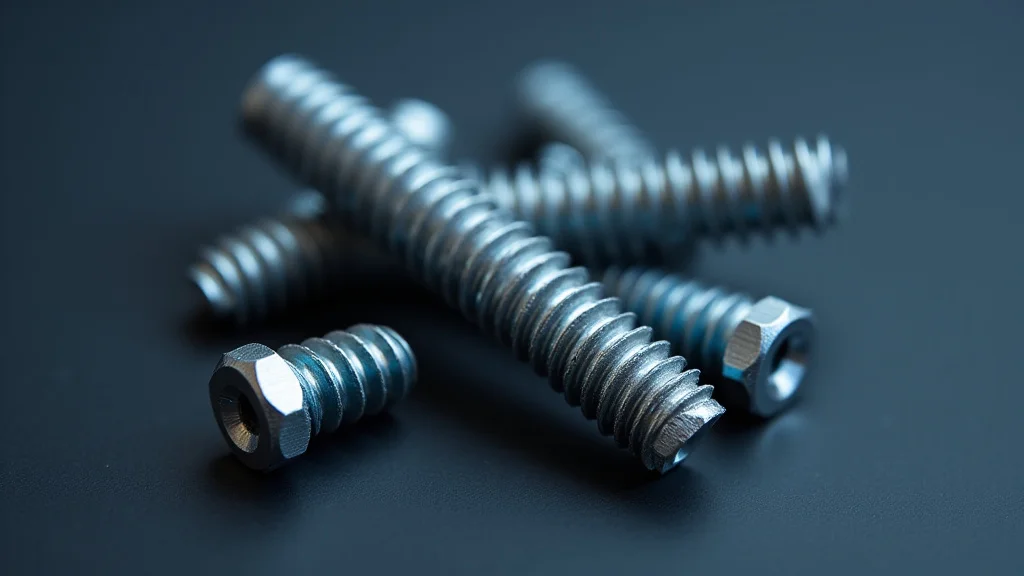
Ever tried to hang a picture, assemble furniture, or fix a squeaky door? Chances are you’ve used a screw. They’re the unsung heroes of the construction and repair world, holding everything from your house frame to your electronic devices together. But with so many different types of screws, it can be tricky to know which one to use for the job. This post explores 5 examples of screw types, delving into their features, uses, and how they make your projects easier. You’ll gain valuable knowledge that will help you select the right screw for any task, preventing frustration and ensuring your projects are built to last. By the end, you’ll be able to confidently choose the perfect fastener, improving your project’s success, and preventing future headaches. Prepare to become a screw expert!
Key Takeaways
- Learn about the main types of screws and their distinct characteristics.
- Discover the ideal applications for each screw type, enhancing your project results.
- Understand the importance of choosing the right screw for different materials.
- Gain insights into screw terminology and specifications.
- Improve your ability to select the right fastener, saving time and money.
Screws: Essential Fasteners for Every Project
Screws are critical fasteners, small but mighty, used to join materials. They work by converting rotational motion into linear motion, creating a secure hold by threading into materials. The design and function can change drastically depending on their intended use. From simple wood screws to specialized machine screws, their applications span across construction, manufacturing, and even delicate electronics. The simple concept of a threaded shaft allows for secure attachment in various materials.
The Anatomy of a Screw
To really appreciate the functionality, it’s essential to become acquainted with the anatomy of a screw. Each part plays a role in its overall functionality and performance. Key features such as the head, shank, thread, and point influence a screw’s ability to grip, penetrate, and create a secure bond. Understanding these elements can improve your screw choice for different projects.
- Head: The head is the part you apply force to turn. It comes in various shapes, like flat, pan, or oval. The head determines how the screw is used and how visible it will be. Flat heads countersink into the material, whereas pan heads provide a larger surface area for better grip.
- Shank: The shank is the smooth part of the screw, the portion without threads, found between the head and the threads. Some screws have a fully threaded shank, while others have a partially threaded shank. The shank’s design is critical, determining the screw’s capacity to withstand stress and its overall holding ability.
- Threads: These are the helical ridges that wrap around the shank, allowing the screw to grip into the material. The thread pitch, which is the distance between each thread, can be coarse or fine, depending on the application. Coarse threads are suitable for soft materials, while fine threads work best for harder materials.
- Point: The point is the end of the screw, which can be sharp, blunt, or self-drilling. The point assists with initial penetration. A sharp point is often used for soft materials, whereas self-drilling points can create their own pilot hole, ideal for metal.
- Material: The material can be made from various materials, usually steel, brass, or stainless steel, to address specific needs. The material impacts the screw’s ability to resist corrosion, its strength, and how it performs in different environments.
Screw Terminology: Decoding the Lingo
Screw terminology can seem complicated at first, but knowing the basic terms will assist in screw selection. Understanding these terms will enable you to effectively describe the fasteners you need and select the right ones. Learning how the size, threads, and drive affect the use will help when taking on any project.
- Diameter: The diameter is the screw’s width, measured in inches (or fractions of an inch) or millimeters. It dictates the size of the pilot hole needed and the screw’s overall holding capacity. A larger diameter screw offers greater strength.
- Length: This is the distance from the screw head to the tip of the point. Selecting the correct length is essential to ensure that the screw properly penetrates the materials. Too short, and it won’t grip; too long, and it can damage the materials.
- Thread Pitch: This refers to the spacing between the threads. It influences how easily the screw enters the material and how much holding power it provides. Coarse threads are further apart, suitable for soft materials, whereas fine threads are closer, ideal for hard materials.
- Drive Type: The drive type is the shape of the recess in the screw head that accepts the screwdriver or driver bit. Common drive types include Phillips, slotted, square (Robertson), and Torx. The drive type affects how easily the screw is driven and how much torque can be applied.
- Pilot Hole: A pilot hole is a pre-drilled hole that assists the screw in entering the material. It prevents the wood from splitting and makes it easier to drive the screw. The pilot hole diameter should be slightly smaller than the core diameter of the screw.
5 Examples of Screw Types and Their Applications
The world of fasteners offers a variety of screws, each made for specific applications. Knowing the features of different screws is vital to success in different projects. From the classic wood screw to specialized sheet metal screws, you will be able to make informed choices. This section covers 5 examples of screw types, highlighting their features and use cases.
Wood Screws: The Versatile All-Rounder
Wood screws are designed specifically for use in wood. They have a partially threaded shank and a sharp point, allowing them to bite into the wood fibers and provide a strong hold. The head shape varies, often including flat, oval, or round, and this influences how the screw sits in the wood. Wood screws are easy to use in various carpentry and DIY tasks.
- Features: Wood screws feature a partially threaded shank, a sharp point, and typically a coarse thread pitch. The head comes in various styles, and they are usually made from steel. The coarse thread ensures a good grip in wood.
- Applications: Wood screws are suitable for general woodworking tasks, such as building furniture, framing walls, and attaching wood components. They’re ideal for both softwood and hardwood applications, offering versatility in your project needs.
- Choosing the Right Wood Screw: Selecting the right wood screw involves considering the length and diameter. The length should be long enough to penetrate the materials fully, while the diameter should match the size of the project. Also, consider the head style for a cleaner finish.
Here’s an example: You are building a bookshelf, and you are using wood screws to connect the shelves to the side supports. You would use wood screws with a flat head to countersink them for a clean finish.
Sheet Metal Screws: Fastening Metal with Ease
Sheet metal screws are designed for fastening metal sheets and other thin metal materials. They feature a sharp, self-tapping point and threads that run the length of the screw. This design allows them to cut their own threads as they are driven into the metal. Sheet metal screws are essential for various metalworking tasks.
- Features: These screws typically have a sharp point and threads that extend to the head. They are made from hardened steel and come in various head styles. Their self-tapping ability makes them very efficient for attaching metal sheets.
- Applications: Sheet metal screws are used in metal fabrication, automotive repair, and HVAC applications. These fasteners are great for joining metal components in ducts, car bodies, or appliance parts.
- Choosing the Right Sheet Metal Screw: Consider the metal thickness and the desired holding strength. The screw’s length should be appropriate for the metal’s thickness, and the head style should be chosen based on the application’s appearance.
Imagine you are repairing a car’s fender. You would use sheet metal screws to reattach it. The self-tapping function of the screw removes the need to pre-drill holes, making the job faster and easier.
Drywall Screws: The Professionals’ Choice
Drywall screws are designed explicitly for installing drywall or gypsum board. They have a bugle head, a coarse thread, and a sharp point. The bugle head ensures a smooth finish, while the coarse thread provides excellent grip in the drywall and the wood or metal studs behind it. They are critical for drywall installation.
- Features: These screws have a bugle head, coarse threads, and a sharp point, often with a self-drilling tip. They are often made from phosphate-coated steel to prevent corrosion. Their design makes them perfect for penetrating drywall while providing a flush finish.
- Applications: Drywall screws are mainly used in residential and commercial construction to attach drywall to studs. They are also useful for other interior finishing tasks where a smooth, flush finish is needed.
- Choosing the Right Drywall Screw: Select the screw length depending on the thickness of the drywall and the type of studs (wood or metal). Also, the bugle head is designed to recess slightly into the drywall without tearing the paper facing, creating a perfect surface for joint compound.
Consider a situation where you are remodeling a room. You will use drywall screws to install drywall panels onto wooden studs. The screws provide a secure and flush mount, ready for taping and painting.
Machine Screws: Precision Fastening
Machine screws are versatile screws designed for use in pre-tapped holes or with nuts. They have a consistent diameter and thread pitch along their entire length. These screws are suitable for a wide range of applications where precision and a consistent thread are needed. Machine screws come in various sizes and head styles.
- Features: Machine screws feature a consistent diameter and thread pitch, which means their threads are uniform. They come with various head styles, like flat, pan, or button, and are available in various materials such as steel and stainless steel. Their uniform threading ensures a secure fit with nuts or in pre-threaded holes.
- Applications: These screws are widely used in machinery, electronics, and automotive applications. They are suitable for tasks where precise and reusable fasteners are required. Machine screws offer reliability in mechanical applications.
- Choosing the Right Machine Screw: Choose the screw based on the size of the hole or the size of the nut that will be used. Consider thread pitch, length, and head style based on the specific needs of the job. Material choice is also critical, and stainless steel offers good corrosion resistance.
If you’re assembling a computer, you may use machine screws to fix the motherboard and other components within the case. This type of screw ensures a secure and precise connection, maintaining the stability of the device.
Self-Tapping Screws: Speed and Efficiency
Self-tapping screws, like sheet metal screws, cut their own threads as they are driven into a material. This eliminates the need for pre-tapped holes, saving time and simplifying the fastening process. They come in various types and are suitable for use in metal, plastic, and other materials. Self-tapping screws offer ease of use, as they eliminate the extra step of creating a threaded hole.
- Features: Self-tapping screws have a hardened point and threads, allowing them to create their own threads as they are turned into the material. The design varies depending on the materials they will be used in. These screws are designed for materials that do not readily accept threads.
- Applications: These screws are widely used in a variety of industries. This includes automotive, appliance manufacturing, and general construction. They’re excellent for attaching parts to metal, plastics, or other materials without pre-threading.
- Choosing the Right Self-Tapping Screw: When selecting self-tapping screws, consider the material thickness and the type of material. The point and thread design should match the material. For example, screws designed for metal will have a different point and thread design than those designed for plastic.
Assembling plastic toys will be much easier with self-tapping screws, because they can be screwed directly into the plastic, avoiding the need to pre-drill or tap holes.
Common Myths Debunked
Myth 1: All Screws are the Same
In reality, different types of screws have their unique features and uses. Selecting the wrong screw can lead to problems like stripped threads, weakened joints, or damaged materials. Each screw type is engineered with specific features, such as thread pitch, head style, and point design. Using the right screw can save time and money, ensuring your projects are built to last.
Myth 2: A Larger Screw Is Always Better
While a large screw may offer increased holding power, it’s not always the best choice. A screw that is too large can split the material, especially in wood, causing more damage. The best practice is to select a screw with the appropriate length and diameter. Consider the thickness of the materials being joined and the type of forces the joint will need to endure. Too large of a screw will make a bad connection.
Myth 3: Screws Don’t Require Pilot Holes
Although some screws, like self-tapping screws, can create their own holes, pilot holes are still beneficial. Pilot holes will help to guide the screw, minimizing the chances of splitting the material, and making it easier to drive the screw in straight. It provides for a stronger and better-aligned connection. The use of a pilot hole before using a screw is frequently overlooked but can provide a better result.
Myth 4: You Can Use Any Screw for Any Material
Using the wrong screw for a particular material can result in failure. For example, using a wood screw in metal will not hold, while using a sheet metal screw in wood will be inefficient and may damage the wood. Each screw is specifically designed for certain materials and applications, so using the correct one is vital to the success of your project.
Myth 5: Tightening a Screw as Much as Possible Guarantees a Stronger Joint
Over-tightening a screw can strip the threads, leading to a weakened connection. Tighten screws until they’re snug, and the materials are held securely. Overtightening can cause damage and weaken the materials, particularly wood. The ideal goal is to achieve a strong joint without compromising the materials involved. A balance is necessary for a successful screw application.
Frequently Asked Questions
Question: What is the difference between a wood screw and a sheet metal screw?
Answer: Wood screws have a partially threaded shank and a sharp point for use in wood. Sheet metal screws have threads that run to the head and a self-tapping point designed for metal.
Question: Can I reuse screws?
Answer: It’s generally not recommended to reuse screws, as they may have lost some of their holding power after being driven in and out. For critical applications, it’s better to use new screws.
Question: How do I choose the correct screw length?
Answer: Select a screw length that’s long enough to fully penetrate the materials being joined. You may also need additional length to securely hold the materials together. As a general rule, make sure the screw penetrates at least halfway through the bottom piece.
Question: What’s the best way to prevent a screw from stripping?
Answer: Use the correct size pilot hole, don’t over-tighten, and use a screwdriver or driver bit that matches the screw’s drive type.
Question: What does thread pitch mean?
Answer: Thread pitch refers to the distance between the threads on a screw. It impacts how easily the screw enters the material and how much holding power it provides. It is essential when pairing with a nut or pre-tapped hole.
Final Thoughts
Understanding the features and applications of 5 examples of screws is useful for both DIY enthusiasts and professionals. The correct screw choice can improve the success of your projects. From the versatile wood screw to the specialized sheet metal screw, each type serves a unique function. With the information, you can identify the correct screw for your projects and learn how different screw types function. Whether you’re building furniture, assembling appliances, or making repairs, the proper fastener will guarantee a sturdy, long-lasting result. Equip yourself with the knowledge to make smart choices. Now, when you next start a project, you’ll be able to select the perfect screw, ensuring durability and success.